A brief summary of structuring one SPV into another SPV.
This involves a legal structure where one SPV invests into another SPV. Reasons for this structure might include acquiring a secondary interest from an existing SPV.
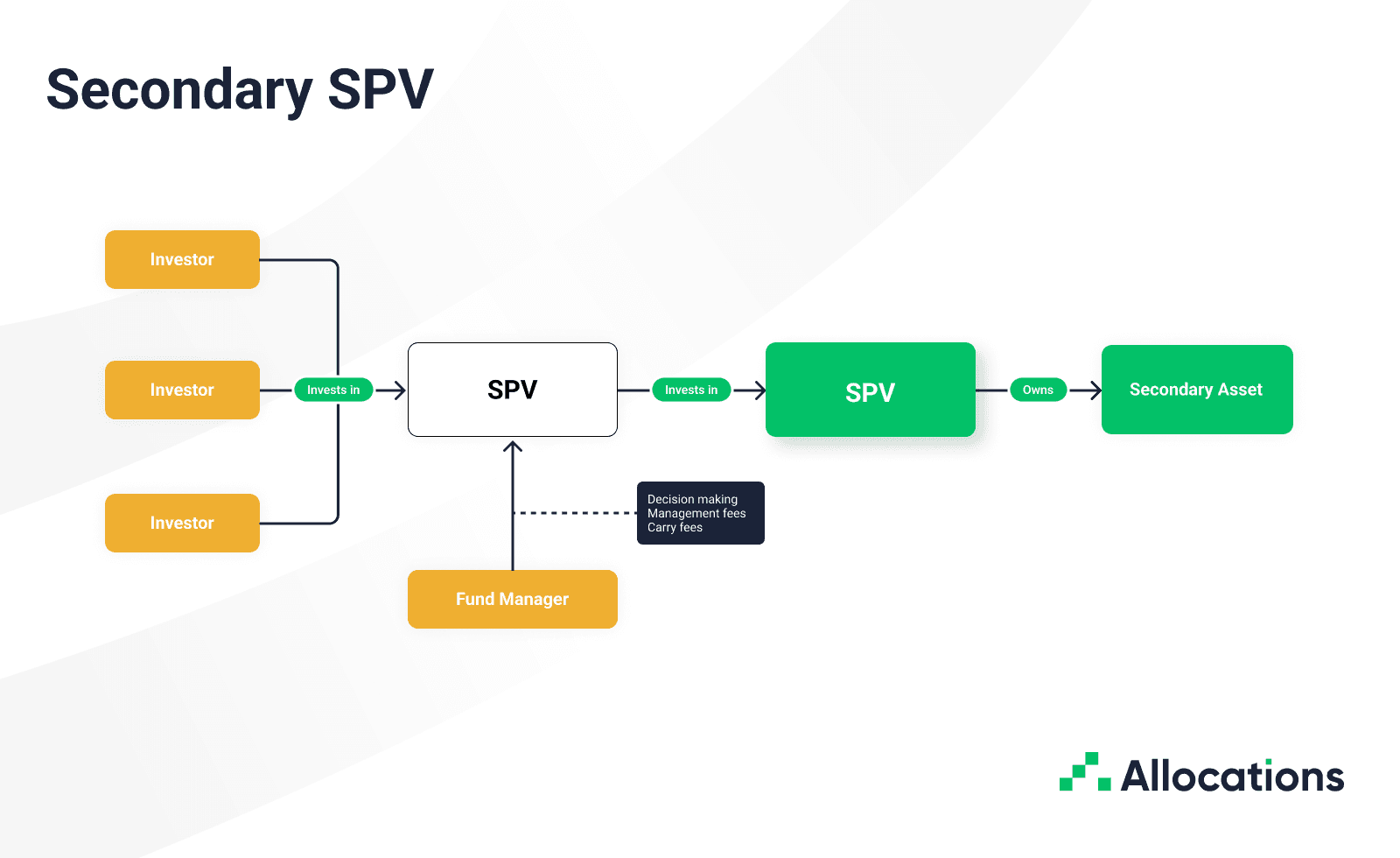
Benefits:
Access: Gain access to more types of deals through existing SPVs.
Membership Interest: Leverage membership interest benefits of SPVs to streamline the acquisition of shares.
Legal Structure: Clear legal structure with existing ownership of an asset.
Structure Considerations:
Investment Agreement: It’s important to ensure the investment agreement into the second SPV is clear and accurately represents the securities being purchased.
Tax Returns: It’s crucial to consider the tax return implications of having two SPVs. Usually, there will be pass-through SPV returns from SPV 2 to SPV 1. The fund administrator may need to wait to receive tax returns from SPV 2.
Fees: There are twice as many sources of fees to consider across SPVs, management, and carry fees. The fund administrator needs to be able to calculate the fee breakdown.
Fund Admin Support: As of April 2024, AngelList has reportedly discontinued support for the SPV into SPV structure. Common complexities that may have contributed to this include: Tax Returns: SPV into SPV typically causes delayed K-1s due to waiting for the second SPV’s tax returns and additional fees that can complicate the calculations. Fees: With two SPVs, there are typically fees from both, including administration fees, management fees, and carry fees.
Conclusion
SPV into SPV can be more complex than standard SPVs, so it is important to partner with a strong fund administrator that can support these transactions. Allocations.com has powered many SPV into SPV transactions, e.g., multiple SpaceX SPV into SPV transactions. The platform was built to support these types of deals and will continue to do so 🚀.
Allocations gets you from idea to funded SPV in days — not weeks.
Author

Addhyan Negi
Director of Marketing, Allocations
Addhyan leads marketing at Allocations, a fintech platform for SPVs and fund administration, where he's spent the last few years building organic growth and content strategy across private markets. He writes about pre-IPO investing, fund structures, and the mechanics of how private companies actually get bought and sold. Outside of work, he's usually deep in the latest frontier AI models or listening to Punjabi music.
Top 10 Fund Administration Companies in 2026 (And How to Choose)
The top fund administration companies in 2026 across three tiers: institutional giants (SS&C, Citco, Apex), private capital specialists (Gen II, Standish, Alter Domus), and tech-native platforms.
SPVs
SPV Capital Calls: How They Work, When to Use Them, and Common Mistakes
How capital calls work in SPVs: single-close vs called capital, the mechanics of a call notice, default remedies, when SPVs into funds need call schedules, and common GP mistakes.
SPVs
Can a Roth IRA Hold Startup Equity? Rules, Risks, and How to Do It Right
Yes, a Roth IRA can hold startup equity through a self-directed custodian. The prohibited transaction rules, why investing in your own startup is dangerous, and how SPVs fit.
SPVs
