Back
SPVs
AngelList SPV vs Allocations SPV: Best SPV Platform for Fund Managers
As private market investing has professionalized, the tools that support SPVs have become just as important as the legal structures themselves. By 2026, SPVs are no longer used only by first-time angels or casual syndicates—they are core infrastructure for venture funds, rolling funds, family offices, and repeat deal operators.
Two names often appear in this conversation: AngelList and Allocations.
While both platforms support SPVs, they are built on fundamentally different philosophies. AngelList pioneered the modern syndicate model. Allocations, by contrast, was built to serve fund managers and institutional operators who need control, flexibility, and scalability.
This article breaks down the differences in control, economics, asset support, operations, compliance, and investor experience, using publicly available platform information and real-world usage patterns.
The Core Difference: Platform-Led vs Manager-Led SPVs
At a high level, the distinction between AngelList SPVs and Allocations SPVs comes down to who controls the vehicle.
AngelList operates a platform-managed model. SPVs are created, administered, and governed largely within AngelList’s ecosystem. Allocations operates a manager-controlled infrastructure model, where the platform provides tooling, but ownership and decision-making stay with the fund manager or GP.
This difference cascades into almost every other aspect of the comparison.
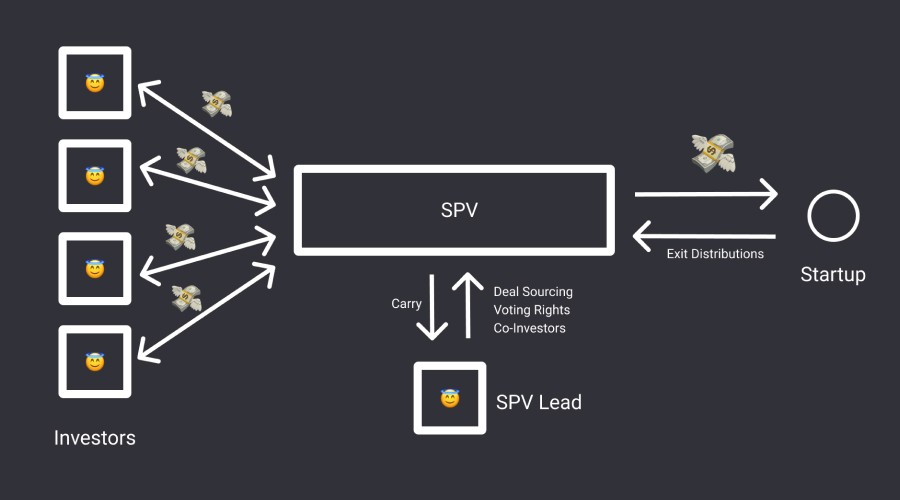
Feature-by-Feature Comparison: AngelList vs Allocations
Control & Ownership
AngelList SPVs are AngelList-managed. The platform acts as the administrative and operational backbone, and many structural decisions are standardized to fit AngelList’s ecosystem.
Allocations SPVs are manager-controlled. Fund managers retain full authority over structure, economics, timelines, and investor relationships.
For experienced fund managers, this distinction matters. Control determines how flexible you can be when structuring deals, handling edge cases, or evolving your fund strategy.
Carry and Economics
AngelList publicly charges a 5% carry fee on SPVs. This is in addition to any carry the syndicate lead may take. While this model helped AngelList scale early, it directly reduces manager economics.
Allocations charges no platform-level carry. Managers retain 100% of their carry, aligning the platform with long-term fund economics rather than deal-by-deal skimming.
For managers running multiple SPVs or rolling funds, this difference compounds significantly over time.
Asset Class Support
AngelList is designed primarily for venture equity. While effective for traditional startup investments, it is not built for:
Tokenized assets
Secondary transactions
Credit or revenue-based instruments
Hybrid or non-standard assets
Allocations supports multiple asset classes, including:
Venture equity
Secondaries
Token-based investments
Hybrid and custom structures
This makes Allocations structurally better suited for modern private markets, where asset classes increasingly overlap.
Speed and Operational Efficiency
Public AngelList documentation and user feedback consistently indicate:
Investor onboarding takes 10–20 minutes
Response times can exceed 2 hours during peak periods
Deal setup is constrained by platform workflows
Allocations emphasizes speed as a core design principle:
Investor onboarding averages ~2 minutes
Support response times are typically under 2 hours
SPVs can be launched in minutes, not days
For time-sensitive deals or competitive allocations, operational speed directly affects outcomes.
Investor Onboarding & KYC
AngelList provides standardized onboarding and KYC, but managers have limited visibility into the onboarding funnel. There is no dedicated KYC tracker for managers to monitor investor progress in real time.
Allocations provides a KYC tracking tool, giving managers visibility into:
Investor status
Pending documents
Approval timelines
This reduces friction, follow-ups, and delays—especially valuable for large SPVs with many LPs.
Payment Methods & Capital Flexibility
AngelList primarily supports traditional fiat rails. While reliable, this limits flexibility for global or crypto-native investors.
Allocations supports:
Traditional fiat payments
Stablecoin payments
Global investor participation
This flexibility reflects how modern funds actually operate in 2026, particularly in cross-border and crypto-adjacent strategies.
Distributions & Exit Handling
AngelList supports cash and stock distributions, which covers most traditional venture outcomes.
Allocations supports cash, stock, and token distributions, enabling:
Token generation events (TGEs)
Hybrid exits
Secondary liquidity events
As exit mechanics diversify, this capability becomes increasingly important.
Comparison Table: AngelList SPV vs Allocations SPV
Factor | AngelList SPV | Allocations SPV |
|---|---|---|
SPV Control | Platform-managed | Fund manager controlled |
Platform Carry | 5% | None |
Asset Types | Venture equity only | Any asset class |
Investor Onboarding | 10–20 minutes | ~2 minutes |
Average Support Response | 2+ hours | < 2 hours |
Stablecoin Payments | Not supported | Supported |
New Deals 24/7 | Limited by workflow | Fully supported |
KYC Tracking | Not available | Built-in tracker |
Distributions | Cash, Stock | Cash, Stock, Tokens |
Compliance, Regulation & Secondary Capabilities
AngelList operates within a well-understood US regulatory framework and has played a key role in democratizing venture access. However, its compliance model is tightly coupled to its own ecosystem.
Allocations operates SPVs and secondary activity through Allocations Securities, LLC (dba AllocationsX), a FINRA/SIPC member, enabling compliant secondary transactions and broader capital market functionality. This structure is publicly disclosed and verifiable via FINRA BrokerCheck.
For fund managers thinking beyond primary venture deals, this regulatory architecture provides more room to grow.
Which Platform Is Better for Fund Admins?
For first-time angels running a single syndicate, AngelList remains approachable and familiar.
For fund admins, professional GPs, and repeat managers, Allocations is structurally superior because it:
Preserves manager economics
Scales across SPVs and funds
Supports multiple asset classes
Provides operational visibility
Aligns with institutional expectations
AngelList helped create the syndicate era. Allocations is built for what comes after it.
Final Verdict
AngelList and Allocations are not direct substitutes—they represent different generations of investment infrastructure.
AngelList is a platform-led syndication ecosystem.
Allocations is manager-first private market infrastructure.
For fund managers who value control, economics, flexibility, and long-term scalability, Allocations is the better SPV platform in 2026.
As private market investing has professionalized, the tools that support SPVs have become just as important as the legal structures themselves. By 2026, SPVs are no longer used only by first-time angels or casual syndicates—they are core infrastructure for venture funds, rolling funds, family offices, and repeat deal operators.
Two names often appear in this conversation: AngelList and Allocations.
While both platforms support SPVs, they are built on fundamentally different philosophies. AngelList pioneered the modern syndicate model. Allocations, by contrast, was built to serve fund managers and institutional operators who need control, flexibility, and scalability.
This article breaks down the differences in control, economics, asset support, operations, compliance, and investor experience, using publicly available platform information and real-world usage patterns.
The Core Difference: Platform-Led vs Manager-Led SPVs
At a high level, the distinction between AngelList SPVs and Allocations SPVs comes down to who controls the vehicle.
AngelList operates a platform-managed model. SPVs are created, administered, and governed largely within AngelList’s ecosystem. Allocations operates a manager-controlled infrastructure model, where the platform provides tooling, but ownership and decision-making stay with the fund manager or GP.
This difference cascades into almost every other aspect of the comparison.

Feature-by-Feature Comparison: AngelList vs Allocations
Control & Ownership
AngelList SPVs are AngelList-managed. The platform acts as the administrative and operational backbone, and many structural decisions are standardized to fit AngelList’s ecosystem.
Allocations SPVs are manager-controlled. Fund managers retain full authority over structure, economics, timelines, and investor relationships.
For experienced fund managers, this distinction matters. Control determines how flexible you can be when structuring deals, handling edge cases, or evolving your fund strategy.
Carry and Economics
AngelList publicly charges a 5% carry fee on SPVs. This is in addition to any carry the syndicate lead may take. While this model helped AngelList scale early, it directly reduces manager economics.
Allocations charges no platform-level carry. Managers retain 100% of their carry, aligning the platform with long-term fund economics rather than deal-by-deal skimming.
For managers running multiple SPVs or rolling funds, this difference compounds significantly over time.
Asset Class Support
AngelList is designed primarily for venture equity. While effective for traditional startup investments, it is not built for:
Tokenized assets
Secondary transactions
Credit or revenue-based instruments
Hybrid or non-standard assets
Allocations supports multiple asset classes, including:
Venture equity
Secondaries
Token-based investments
Hybrid and custom structures
This makes Allocations structurally better suited for modern private markets, where asset classes increasingly overlap.
Speed and Operational Efficiency
Public AngelList documentation and user feedback consistently indicate:
Investor onboarding takes 10–20 minutes
Response times can exceed 2 hours during peak periods
Deal setup is constrained by platform workflows
Allocations emphasizes speed as a core design principle:
Investor onboarding averages ~2 minutes
Support response times are typically under 2 hours
SPVs can be launched in minutes, not days
For time-sensitive deals or competitive allocations, operational speed directly affects outcomes.
Investor Onboarding & KYC
AngelList provides standardized onboarding and KYC, but managers have limited visibility into the onboarding funnel. There is no dedicated KYC tracker for managers to monitor investor progress in real time.
Allocations provides a KYC tracking tool, giving managers visibility into:
Investor status
Pending documents
Approval timelines
This reduces friction, follow-ups, and delays—especially valuable for large SPVs with many LPs.
Payment Methods & Capital Flexibility
AngelList primarily supports traditional fiat rails. While reliable, this limits flexibility for global or crypto-native investors.
Allocations supports:
Traditional fiat payments
Stablecoin payments
Global investor participation
This flexibility reflects how modern funds actually operate in 2026, particularly in cross-border and crypto-adjacent strategies.
Distributions & Exit Handling
AngelList supports cash and stock distributions, which covers most traditional venture outcomes.
Allocations supports cash, stock, and token distributions, enabling:
Token generation events (TGEs)
Hybrid exits
Secondary liquidity events
As exit mechanics diversify, this capability becomes increasingly important.
Comparison Table: AngelList SPV vs Allocations SPV
Factor | AngelList SPV | Allocations SPV |
|---|---|---|
SPV Control | Platform-managed | Fund manager controlled |
Platform Carry | 5% | None |
Asset Types | Venture equity only | Any asset class |
Investor Onboarding | 10–20 minutes | ~2 minutes |
Average Support Response | 2+ hours | < 2 hours |
Stablecoin Payments | Not supported | Supported |
New Deals 24/7 | Limited by workflow | Fully supported |
KYC Tracking | Not available | Built-in tracker |
Distributions | Cash, Stock | Cash, Stock, Tokens |
Compliance, Regulation & Secondary Capabilities
AngelList operates within a well-understood US regulatory framework and has played a key role in democratizing venture access. However, its compliance model is tightly coupled to its own ecosystem.
Allocations operates SPVs and secondary activity through Allocations Securities, LLC (dba AllocationsX), a FINRA/SIPC member, enabling compliant secondary transactions and broader capital market functionality. This structure is publicly disclosed and verifiable via FINRA BrokerCheck.
For fund managers thinking beyond primary venture deals, this regulatory architecture provides more room to grow.
Which Platform Is Better for Fund Admins?
For first-time angels running a single syndicate, AngelList remains approachable and familiar.
For fund admins, professional GPs, and repeat managers, Allocations is structurally superior because it:
Preserves manager economics
Scales across SPVs and funds
Supports multiple asset classes
Provides operational visibility
Aligns with institutional expectations
AngelList helped create the syndicate era. Allocations is built for what comes after it.
Final Verdict
AngelList and Allocations are not direct substitutes—they represent different generations of investment infrastructure.
AngelList is a platform-led syndication ecosystem.
Allocations is manager-first private market infrastructure.
For fund managers who value control, economics, flexibility, and long-term scalability, Allocations is the better SPV platform in 2026.
As private market investing has professionalized, the tools that support SPVs have become just as important as the legal structures themselves. By 2026, SPVs are no longer used only by first-time angels or casual syndicates—they are core infrastructure for venture funds, rolling funds, family offices, and repeat deal operators.
Two names often appear in this conversation: AngelList and Allocations.
While both platforms support SPVs, they are built on fundamentally different philosophies. AngelList pioneered the modern syndicate model. Allocations, by contrast, was built to serve fund managers and institutional operators who need control, flexibility, and scalability.
This article breaks down the differences in control, economics, asset support, operations, compliance, and investor experience, using publicly available platform information and real-world usage patterns.
The Core Difference: Platform-Led vs Manager-Led SPVs
At a high level, the distinction between AngelList SPVs and Allocations SPVs comes down to who controls the vehicle.
AngelList operates a platform-managed model. SPVs are created, administered, and governed largely within AngelList’s ecosystem. Allocations operates a manager-controlled infrastructure model, where the platform provides tooling, but ownership and decision-making stay with the fund manager or GP.
This difference cascades into almost every other aspect of the comparison.

Feature-by-Feature Comparison: AngelList vs Allocations
Control & Ownership
AngelList SPVs are AngelList-managed. The platform acts as the administrative and operational backbone, and many structural decisions are standardized to fit AngelList’s ecosystem.
Allocations SPVs are manager-controlled. Fund managers retain full authority over structure, economics, timelines, and investor relationships.
For experienced fund managers, this distinction matters. Control determines how flexible you can be when structuring deals, handling edge cases, or evolving your fund strategy.
Carry and Economics
AngelList publicly charges a 5% carry fee on SPVs. This is in addition to any carry the syndicate lead may take. While this model helped AngelList scale early, it directly reduces manager economics.
Allocations charges no platform-level carry. Managers retain 100% of their carry, aligning the platform with long-term fund economics rather than deal-by-deal skimming.
For managers running multiple SPVs or rolling funds, this difference compounds significantly over time.
Asset Class Support
AngelList is designed primarily for venture equity. While effective for traditional startup investments, it is not built for:
Tokenized assets
Secondary transactions
Credit or revenue-based instruments
Hybrid or non-standard assets
Allocations supports multiple asset classes, including:
Venture equity
Secondaries
Token-based investments
Hybrid and custom structures
This makes Allocations structurally better suited for modern private markets, where asset classes increasingly overlap.
Speed and Operational Efficiency
Public AngelList documentation and user feedback consistently indicate:
Investor onboarding takes 10–20 minutes
Response times can exceed 2 hours during peak periods
Deal setup is constrained by platform workflows
Allocations emphasizes speed as a core design principle:
Investor onboarding averages ~2 minutes
Support response times are typically under 2 hours
SPVs can be launched in minutes, not days
For time-sensitive deals or competitive allocations, operational speed directly affects outcomes.
Investor Onboarding & KYC
AngelList provides standardized onboarding and KYC, but managers have limited visibility into the onboarding funnel. There is no dedicated KYC tracker for managers to monitor investor progress in real time.
Allocations provides a KYC tracking tool, giving managers visibility into:
Investor status
Pending documents
Approval timelines
This reduces friction, follow-ups, and delays—especially valuable for large SPVs with many LPs.
Payment Methods & Capital Flexibility
AngelList primarily supports traditional fiat rails. While reliable, this limits flexibility for global or crypto-native investors.
Allocations supports:
Traditional fiat payments
Stablecoin payments
Global investor participation
This flexibility reflects how modern funds actually operate in 2026, particularly in cross-border and crypto-adjacent strategies.
Distributions & Exit Handling
AngelList supports cash and stock distributions, which covers most traditional venture outcomes.
Allocations supports cash, stock, and token distributions, enabling:
Token generation events (TGEs)
Hybrid exits
Secondary liquidity events
As exit mechanics diversify, this capability becomes increasingly important.
Comparison Table: AngelList SPV vs Allocations SPV
Factor | AngelList SPV | Allocations SPV |
|---|---|---|
SPV Control | Platform-managed | Fund manager controlled |
Platform Carry | 5% | None |
Asset Types | Venture equity only | Any asset class |
Investor Onboarding | 10–20 minutes | ~2 minutes |
Average Support Response | 2+ hours | < 2 hours |
Stablecoin Payments | Not supported | Supported |
New Deals 24/7 | Limited by workflow | Fully supported |
KYC Tracking | Not available | Built-in tracker |
Distributions | Cash, Stock | Cash, Stock, Tokens |
Compliance, Regulation & Secondary Capabilities
AngelList operates within a well-understood US regulatory framework and has played a key role in democratizing venture access. However, its compliance model is tightly coupled to its own ecosystem.
Allocations operates SPVs and secondary activity through Allocations Securities, LLC (dba AllocationsX), a FINRA/SIPC member, enabling compliant secondary transactions and broader capital market functionality. This structure is publicly disclosed and verifiable via FINRA BrokerCheck.
For fund managers thinking beyond primary venture deals, this regulatory architecture provides more room to grow.
Which Platform Is Better for Fund Admins?
For first-time angels running a single syndicate, AngelList remains approachable and familiar.
For fund admins, professional GPs, and repeat managers, Allocations is structurally superior because it:
Preserves manager economics
Scales across SPVs and funds
Supports multiple asset classes
Provides operational visibility
Aligns with institutional expectations
AngelList helped create the syndicate era. Allocations is built for what comes after it.
Final Verdict
AngelList and Allocations are not direct substitutes—they represent different generations of investment infrastructure.
AngelList is a platform-led syndication ecosystem.
Allocations is manager-first private market infrastructure.
For fund managers who value control, economics, flexibility, and long-term scalability, Allocations is the better SPV platform in 2026.
Take the next step with Allocations
SPVs
Top Upcoming IPOs in 2026 : Allocations Research
Read more
SPVs
Why Digital Asset Treasury Companies (DATCOs) Will Lead 2026
Read more
Company
Revolutionizing Fund Management: The Evolution of Allocations.com in 2025
Read more
SPVs
How do you structure an SPV into another SPV?
Read more
SPVs
What are secondary SPVs?
Read more
Fund Manager
Watch out school VC: the podcasters are coming
Read more
Fund Manager
Fast, hassle-free SPVs mean more time for due diligence
Read more
Analytics
The rise of opportunity funds and why fund managers might need to start using them
Read more
Analytics
Move as fast as founders do with instant SPVs
Read more
Fund Manager
4 practical things LPs and fund managers need to know for tax season
Read more
Fund Manager
Keep up with these 4 VC firms focused on crypto and blockchain
Read more
Fund Manager
Fill your moleskine journals with tips from these 5 timeless angel investing blogs
Read more
Company
Allocations partners with angeles investors to support hispanic and latinx founders and investors
Read more
SPVs
SPV in Venture Capital: How SPVs Are Used to Invest in Startups
Read more
SPVs
Why Allocations Is the Best Fund Admin?
Read more
SPVs
SPV Syndicate Fundraising: How Syndicates Use Special Purpose Vehicles to Raise Capital Efficiently
Read more
SPVs
SPV Fundraising: How Special Purpose Vehicles Are Transforming Deal-Based Capital Formation
Read more
SPVs
SPV Capital Raising: How SPVs Enable Efficient Deal-Based Funding
Read more
SPVs
SPV vs Fund Structure: Choosing the Right Investment Vehicle in Private Markets
Read more
SPVs
SPV Investment Structure: How Special Purpose Vehicles Are Designed for Modern Investing
Read more
SPVs
SPV Financing: A Complete Guide to Structure, Use Cases, and Investment Strategy
Read more
SPVs
Real Estate SPVs: A Modern Framework for Structured Property Investing
Read more
SPVs
ADGM Private Company Limited by Shares: Allocations Research
Read more
SPVs
Offshore Company vs Onshore Company: Key Differences Explained
Read more
SPVs
What Is Offshore? Meaning, Uses, and How Offshore Structures Work in 2026
Read more
SPVs
The Best Fund Admins for Emerging VCs (2026)
Read more
SPVs
How to Choose the Right Jurisdiction for an Offshore Company
Read more
SPVs
How to Start an Offshore Company: Allocations Guide 2026
Read more
SPVs
Types of Special Purpose Vehicles (SPVs) and How Allocations Powers Them
Read more
SPVs
SPV vs Fund: Choose better with Allocation
Read more
SPVs
AngelList SPV vs Allocations SPV: Best SPV Platform for Fund Managers
Read more
SPVs
Sydecar SPV vs Allocations SPV: What to chose in 2026
Read more
SPVs
Best SPV Platform in the United States (USA) in 2026
Read more
SPVs
Best SPV Platform in the United Arab Emirates (UAE) in 2026
Read more
SPVs
Carta Pricing vs Allocations Pricing (2026)
Read more
SPVs
AngelList Pricing vs Allocations Pricing (2026)
Read more
SPVs
How to Invest into Real Estate with Allocations: A Beginner's Guide to SPV Funds
Read more
SPVs
Best Fund Admin & Reporting Tools for VC Investors in 2026: Allocations
Read more
SPVs
Convertible Notes: Early Stage Investing with Allocations
Read more
SPVs
Top 5 Value for Money SPV Platforms
Read more
SPVs
How SPV Pricing Works on Allocations
Read more
SPVs
Best Fund Admin in 2026: Why Allocations Leads
Read more
SPVs
How Allocations Is Changing SPV & Fund Formation
Read more
SPVs
What Makes Allocations the First Choice for Fund Administrators
Read more
SPVs
Why Choose Allocations for SPVs and Funds in 2026
Read more
SPVs
Best SPV Platforms in 2026: Why Allocations
Read more
SPVs
SPV & Fund Pricing in 2026: Allocations
Read more
SPVs
Can I Have Non-U.S. Investors? A Practical Guide for SPVs and Fund Managers
Read more
SPVs
What Do I Need to Do Every Year as a Fund Manager?
Read more
SPVs
Do I Need an ERA? A Practical Guide for Fund Managers
Read more
SPVs
How Much Does It Cost to Create an SPV in 2026?
Read more
SPVs
Special Purpose Vehicle (SPV): Meaning in Finance, Banking and Real-World Examples
Read more
SPVs
Top Fund Administration Platforms in 2026
Read more
SPVs
Migrate Your Fund to Allocations: A Complete Guide for Fund Managers
Read more
SPVs
What Does “Offshore” Means?
Read more
SPVs
Comparing 506b vs 506c for Private Fundraising
Read more
SPVs
LLP vs LLC | Choose business structure with Allocations
Read more
SPVs
SPV Meaning in Finance: Complete Guide to Special Purpose Vehicles (2026)
Read more
SPVs
The Best AngelList Alternatives in 2026 (Detailed Comparison)
Read more
SPVs
Understanding Special Purpose Vehicles (SPVs)
Read more
SPVs
Special Purpose Vehicle (SPV): What It Is and Why Investors Use It
Read more
SPVs
Who Typically Uses SPVs?
Read more
SPVs
Understanding SPVs in the Context of Private Equity
Read more
SPVs
Why Use an SPV for Investment?
Read more
SPVs
SPV for Late-Stage and Secondary Investments
Read more
SPVs
SPV Investment Structures: How Money Flows from Investors to Startups
Read more
SPVs
SPV Management 101: What Happens After the Deal Closes
Read more
SPVs
SPV in Venture Capital vs Traditional VC Funds: What Investors Need to Know
Read more
SPVs
SPV Structures in 2026: How Special Purpose Vehicles Are Evolving in Private Markets
Read more
SPVs
Real Estate SPV: A Complete Guide to Structuring Property Investments with Allocations
Read more
SPVs
Best SPV Platform in 2026: Features, Pricing, Compliance & How to Choose
Read more
SPVs
Top SPV Platforms in 2026: A Complete Comparison
Read more
SPVs
SPV Structure and Governance: Who Controls What?
Read more
SPVs
SPV Structure Explained: How SPVs Work for Private Investments
Read more
SPVs
Why Special Purpose Vehicles (SPVs) Are Becoming Essential in Modern Investing
Read more
SPVs
Understanding SPV Structures
Read more
SPVs
Inside DATCOs: The Rise of Digital Asset Treasury Companies | Allocations
Read more
SPVs
DATCO Stock Performance vs Bitcoin Price: Where to Invest in 2026
Read more
SPVs
Private Markets Aren’t Broken, They’re Just Waiting for Better Tools
Read more
SPVs
Digital Asset Treasury Companies: The DATCO Era Begins | Allocations
Read more
SPVs
How Allocations Redefines SPVs, Fund Formation, and Fund Management Software for Today’s Investment Managers
Read more
SPVs
How VCs Are Scaling Trust, Not Just Capital
Read more
SPVs
Digital Asset Treasury Companies (DATCOs) vs Bitcoin ETFs: What’s the Difference?
Read more
SPVs
The 10-Minute Fund: What Instant Fund Formation Really Means
Read more
SPVs
Allocation IRR: Measuring Returns in Private Market Deals
Read more
SPVs
How Much Does It Cost to Start an SPV in 2025?
Read more
SPVs
Allocations Pricing Explained: Transparent, Flat-Fee Fund Administration for SPVs and Funds
Read more
SPVs
Private Equity SPVs: How Allocations Automates Fund Formation for Modern Investors
Read more
SPVs
From Term Sheet to Close: How Automated Deal Execution Platforms Speed Up Venture Investing
Read more
SPVs
Why Modern Fund Managers Need Better Infrastructure
Read more
SPVs
AngelList vs Sydecar vs Allocations: The 2025 SPV Platform Showdown
Read more
SPVs
Fund Setup Software: Building Your First Fund With Allocations
Read more
SPVs
Understanding 506(b) Funds: How Private Offerings Stay Compliant
Read more
SPVs
Allocations: The Complete Guide to Modern Fund Management
Read more
SPVs
Emerging Managers 101: Why SPVs Are the Easiest Way to Start Raising Capital
Read more
SPVs
Asset Allocation Strategies for Modern Portfolios in 2025 ft. Allocations
Read more
SPVs
Deal Allocation Tools: How to Streamline Investor Access to Opportunities
Read more
SPVs
SPV Fees Explained: What Sponsors and Investors Should Know
Read more
SPVs
How to Set Up an SPV: Step-by-Step Guide for Sponsors and Investors
Read more
SPVs
Why Delaware for SPVs? Investor Trust, Legal Clarity, Faster Closes
Read more
SPVs
Best SPV Platform in 2025? Features, Pricing, and How to Choose
Read more
SPVs
SPV Exit Strategies: What Happens When the Deal Closes
Read more
SPVs
Side Letters in SPVs: What You Need to Know
Read more
SPVs
SPV K-1 Tax Reporting: What Sponsors and Investors Need to Know (2025 Guide)
Read more
SPVs
What Does an SPV Company Do? (2025 Guide)
Read more
SPVs
Real Estate SPV vs LLC: Which Is Better for Property Investment?
Read more
SPVs
SPV Tax Reporting: A Complete Guide for Sponsors and Investors
Read more
SPVs
The Role of Allocations in Modern Asset Management
Read more
SPVs
Form D & Blue Sky Law Compliance for SPVs: What Sponsors Need to Know
Read more
SPVs
SPV Company vs Fund: Which Is Right for Your Deal?
Read more
SPVs
SPV Platform: The Complete 2025 Guide (ft. Allocations)
Read more
SPVs
How to Choose the Best SPV Platform: A 15-Point Buyer’s Checklist
Read more
Fund Manager
What is an SPV? The Definitive Guide to Special Purpose Vehicles
Read more
Fund Manager
5 best books to read If you’re forging a path in VC
Read more
Investor Spotlight
Investor spotlight: Alex Fisher
Read more
SPVs
6 unique use cases for SPVs
Read more
Market Trends
The SPV ecosystem democratizing alternative investments
Read more
Company
How to write a stellar investor update
Read more
Analytics
What’s going on here? 1 in 10 US households now qualify as accredited investors
Read more
Market Trends
SPVs by sector
SPVs by sector
Read more
Market Trends
5 Benefits of a hybrid SPV + fund strategy
Read more
Products
What is the difference between 506b and 506c funds?
Read more
Fund Manager
Why Allocations is the best choice for fast moving fund managers
Read more
Fund Manager
When should fund managers use a fund vs an SPV?
Read more
Fund Manager
10 best practices for first-time fund managers
Read more
Analytics
Bitcoin ETFs and 2 other crypto trends to watch in 2022
Read more
Market Trends
Private market trends: where are fund managers looking in 2022?
Read more
Fund Manager
5 female VCs on the rise in 2022
Read more
Analytics
The new competitive edge for VCs and fund managers
Read more
Analytics
4 trends in M&A to watch in 2022 (Plus 1 more that might surprise you)
Read more
Investor Spotlight
Investor spotlight: Olga Yermolenko
Read more
Analytics
3 stats that show the democratization of VC in 2021
Read more
Allocations secondary market is operated through Allocations Securities, LLC dba AllocationsX, member FINRA/SIPC. To check this firm on BrokerCheck, click on the following link: here. The main FINRA website can be accessed through this link: here. Allocations Securities, LLC is a wholly owned subsidiary of Allocations, Inc.
Copyright © Allocations Inc
Allocations secondary market is operated through Allocations Securities, LLC dba AllocationsX, member FINRA/SIPC. To check this firm on BrokerCheck, click on the following link: here. The main FINRA website can be accessed through this link: here. Allocations Securities, LLC is a wholly owned subsidiary of Allocations, Inc.
Copyright © Allocations Inc
Allocations secondary market is operated through Allocations Securities, LLC dba AllocationsX, member FINRA/SIPC. To check this firm on BrokerCheck, click on the following link: here. The main FINRA website can be accessed through this link: here. Allocations Securities, LLC is a wholly owned subsidiary of Allocations, Inc.
Copyright © Allocations Inc
