Back

SPVs

The Best AngelList Alternatives in 2026 (Detailed Comparison)

The Best AngelList Alternatives in 2026 (Detailed Comparison)

The Best AngelList Alternatives in 2026 (Detailed Comparison)

Private market investing has evolved significantly over the past decade. What began as lightweight syndicates and founder-led angel rounds has matured into a sophisticated ecosystem of Special Purpose Vehicles (SPVs), rolling funds, micro-VCs, and structured private capital vehicles. As this market has evolved, so have the expectations for investment infrastructure.

AngelList helped define the first generation of online syndicates. However, in 2026, fund managers and syndicate leads increasingly require greater control, deeper customization, and broader operational coverage than traditional marketplace-driven platforms were designed to offer.

This article examines the top AngelList alternatives in 2026, with a detailed, professional comparison focused on real operational needs. We place Allocations at the top, based on its end-to-end coverage and customization capabilities for modern private investment vehicles.

1. Allocations: The Most Complete AngelList Alternative in 2026
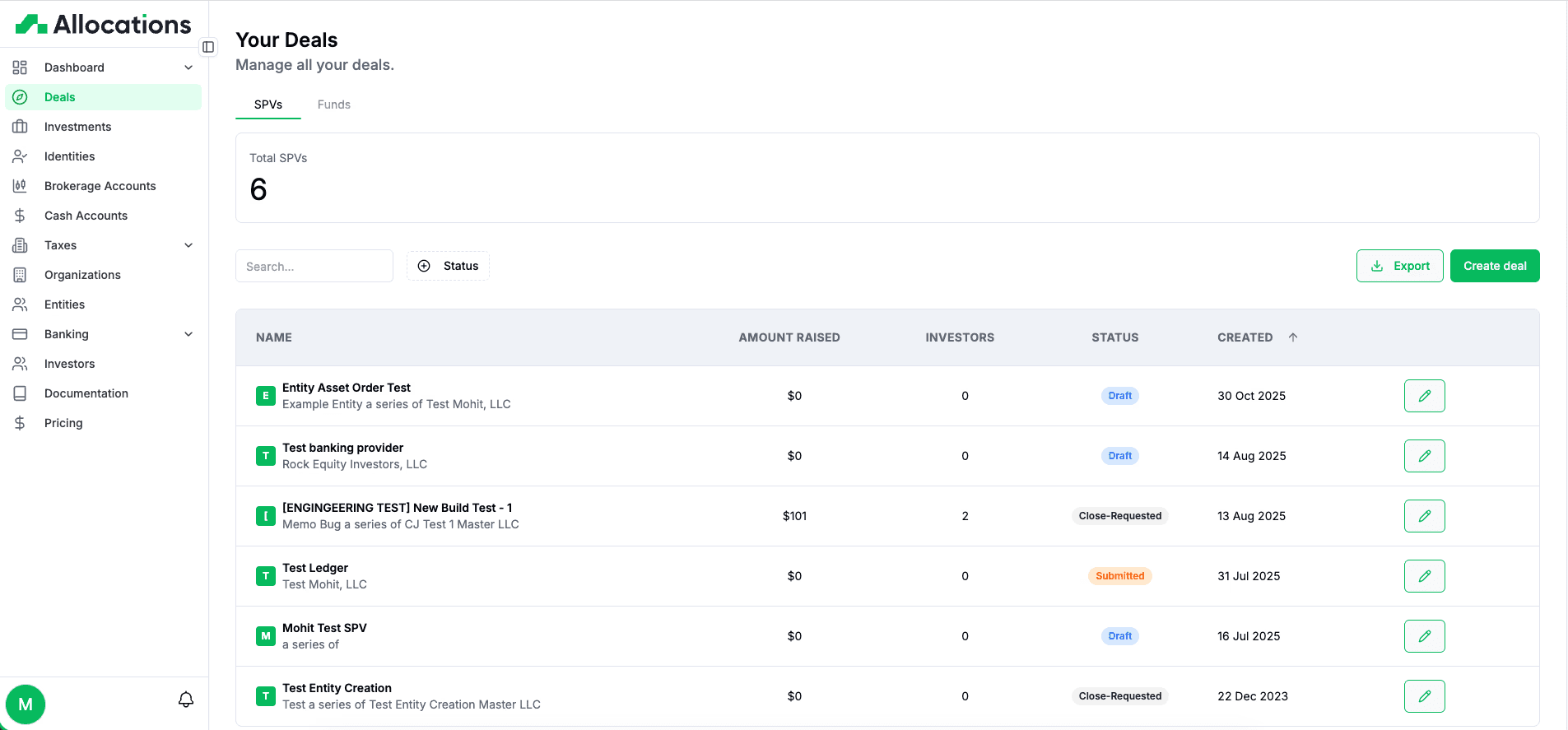
Allocations is purpose-built for today’s private market operators: angel syndicate leads, emerging fund managers, family offices, and deal-by-deal SPV sponsors who need institutional-grade infrastructure without institutional complexity.

End-to-End Coverage, Not a Patchwork

Unlike platforms that specialize in only one layer of the stack (distribution, cap tables, or administration), Allocations provides a fully integrated operating system for private investments:

  • SPV and fund entity formation

  • Integrated banking and capital movement

  • Investor onboarding, accreditation, and digital execution

  • Capital calls, distributions, and reporting

  • Tax-ready documentation and investor dashboards

This unified approach eliminates the need to coordinate between multiple vendors, reducing operational risk and administrative overhead.

Industry-Leading Customization

Allocations is designed for managers who do not fit into one-size-fits-all structures. The platform supports:

  • Multiple LP classes within a single vehicle

  • Custom fee and carried interest waterfalls

  • Tranched capital calls and staged closings

  • White-labeled investor experiences

  • Repeatable templates for managers running multiple SPVs

This level of flexibility is particularly important as private capital structures become more nuanced and as managers differentiate themselves through bespoke economics.

Built for Scale, Not Just Discovery

While discovery is important, Allocations focuses on execution excellence. The platform is optimized for repeat managers who value clean audit trails, consistent reporting, and scalable operations across dozens of vehicles.

Best for:
Managers and syndicate leads who want maximum control, deep customization, and a single platform to run their entire private investment operation.

  1. Carta: Cap Tables and Institutional Fund Administration
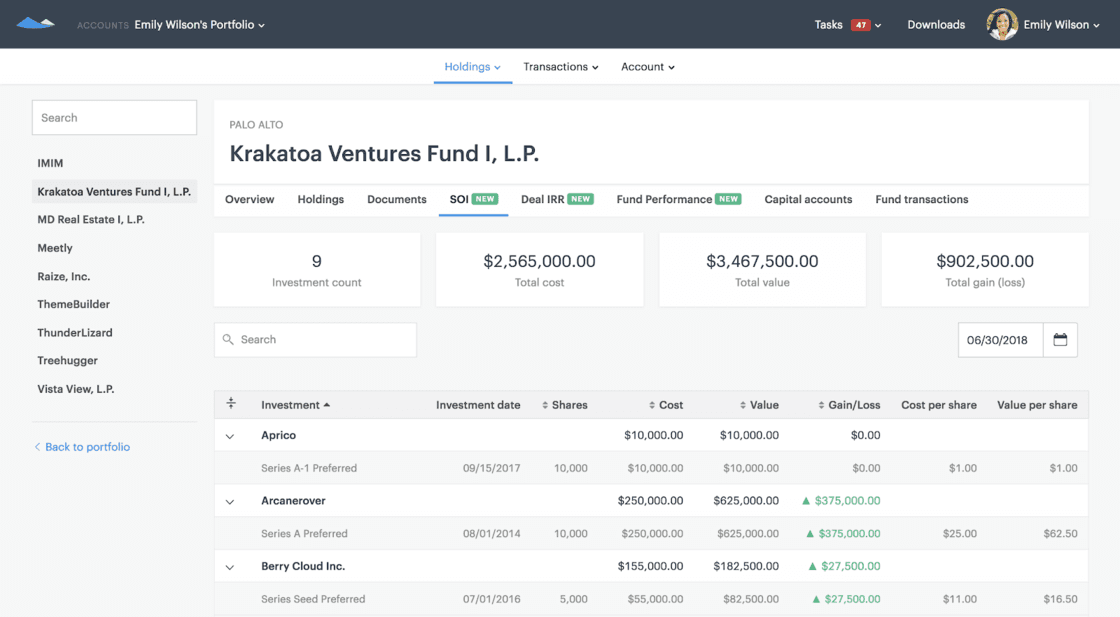
Carta is best known as the industry standard for equity management and cap table infrastructure. Over time, it has expanded into fund administration, making it a credible alternative for managers who value institutional-grade reporting and accounting.

Carta approaches private markets from an ownership and compliance perspective, rather than a fundraising or marketplace lens.

Where Carta Excels

Carta’s strengths are particularly evident after capital has been deployed:

  • Best-in-class cap table management, tightly integrated with portfolio companies

  • Robust fund accounting and reporting, suitable for institutional LP expectations

  • A trusted platform used by later-stage startups, established funds, and finance teams

For managers already embedded in the Carta ecosystem, extending into fund administration can feel operationally familiar and compliant.

Structural Trade-offs

Carta’s focus on administration means it is often not a single-system solution for SPVs or syndicates. Managers may still need to coordinate across multiple providers for:

  • Entity formation

  • Banking and capital movement

  • Investor onboarding and accreditation

This multi-vendor approach works well for institutional managers with operations teams, but can add complexity for lean or emerging managers.

Best suited for

Fund managers who already rely on Carta for cap tables and require strong post-close administration, accounting, and reporting, particularly at later stages.

  1. Republic: Community and Retail Capital Platforms

Platforms like Republic represent a different evolution of private investing: broadening access through regulated crowdfunding frameworks such as Reg CF and Reg A+.

These platforms are designed to support high-volume, public-facing capital raises, often blending investment with community-building and brand engagement.

Where Crowdfunding Platforms Excel

Crowdfunding platforms offer capabilities that traditional syndicate platforms do not:

  • Access to a large retail investor audience

  • Built-in regulatory compliance and KYC for public raises

  • Strong tools for consumer-facing or community-driven companies

For certain founders, especially those with strong customer brands, this approach can unlock capital that would otherwise be inaccessible.

Structural Constraints

The same features that enable scale also introduce limitations:

  • Economics are largely standardized to meet regulatory requirements

  • Manager-controlled SPV customization is limited

  • Not optimized for private, bespoke vehicles with negotiated LP terms

Best suited for

Founders and issuers seeking broad participation and community engagement, rather than highly structured private syndicates or funds.

  1. Sydecar: SPV Infrastructure for Deal-by-Deal Investors
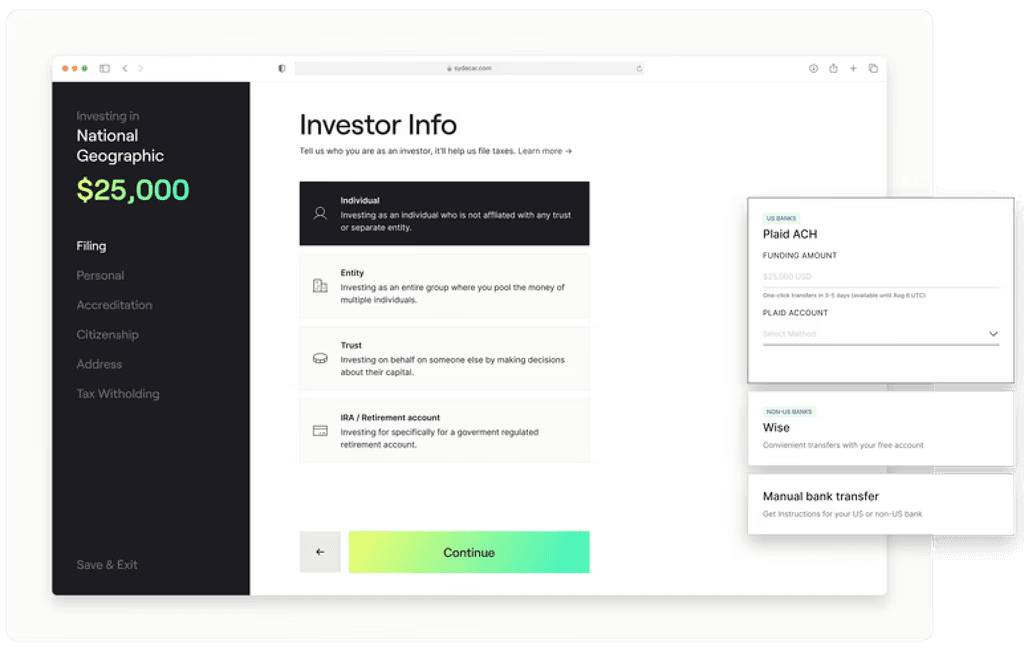
Sydecar is a well-established infrastructure provider focused specifically on deal-by-deal SPVs for angel investors, syndicate leads, and venture funds. Rather than operating as a marketplace, Sydecar positions itself as a back-office and compliance engine that supports private investment vehicles.

Where Sydecar Excels

Sydecar is particularly strong in simplifying the operational mechanics of SPVs:

  • Automated SPV formation and legal setup

  • Investor onboarding, accreditation verification, and document execution

  • Capital calls, distributions, and standardized reporting

  • Compliance workflows designed for U.S.-based private investments

By removing legal and administrative friction, Sydecar enables investors to focus on deal execution rather than operational logistics.

Structural Trade-offs

Sydecar’s product is intentionally focused, which introduces some natural constraints:

  • Limited customization for complex or non-standard economic structures

  • Less flexibility around multi-class LP setups and bespoke waterfalls

  • A more functional, admin-first investor experience rather than a customizable or white-labeled one

As a result, Sydecar works best when SPVs follow relatively standardized terms and workflows.

Best suited for

Angel investors and venture funds that run occasional or repeat SPVs and want a reliable, compliance-first solution without the need for deep customization or branding control.

Complete Comparison of all platforms

Capability / Platform

Allocations

Carta

Sydecar

Republic

SPV entity formation

✅ Included, end-to-end

⚠️ Supported, often separate setup

✅ Included

⚠️ Limited / Reg CF focused

Fund entity formation

✅ Included

✅ Supported

❌ Not core focus

❌ Not applicable

Integrated banking & capital movement

✅ Native integration

⚠️ Via partners

⚠️ Limited

✅ Built-in for crowdfunding

Investor onboarding & accreditation

✅ Included

⚠️ Included, less configurable

✅ Included

✅ Included

Digital document execution

✅ Included

✅ Included

✅ Included

✅ Included

Capital calls

✅ Included

✅ Included

✅ Included

❌ Not applicable

Distributions

✅ Included

✅ Included

✅ Included

❌ Platform-dependent

Tax-ready investor reporting

✅ Included

✅ Strong

⚠️ Standardized

⚠️ Crowdfunding-specific

Multiple LP classes

✅ Fully supported

⚠️ Limited

❌ Not supported

❌ Not supported

Custom fee & carry waterfalls

✅ Fully customizable

⚠️ Moderate flexibility

❌ Standard only

❌ Fixed by regulation

Tranched / staged closings

✅ Supported

⚠️ Limited

⚠️ Limited

❌ Not supported

White-labeled investor experience

✅ Included

❌ Not available

❌ Not available

❌ Not available

Repeat SPV templates

✅ Included

⚠️ Partial

⚠️ Partial

❌ Not applicable

Marketplace / investor discovery

❌ No (by design)

❌ No

❌ No

✅ Core feature

Primary operating model

Full-stack infrastructure

Admin & cap tables

SPV admin engine

Retail capital marketplace

Ideal manager profile

Scaled, repeat managers

Institutional funds

Deal-by-deal SPVs

Consumer/community raises

Why This Comparison Matters

Each of these platforms serves a distinct role in the private investment ecosystem. The key distinction in 2026 is not which platform is “better” in isolation, but which infrastructure aligns with a manager’s strategy, complexity, and long-term goals.

Allocations stands out by addressing the growing segment of managers who want institutional-grade infrastructure with modern flexibility, while the platforms above continue to excel in their respective domains of distribution, administration, dealflow, and community capital.

Private market investing has evolved significantly over the past decade. What began as lightweight syndicates and founder-led angel rounds has matured into a sophisticated ecosystem of Special Purpose Vehicles (SPVs), rolling funds, micro-VCs, and structured private capital vehicles. As this market has evolved, so have the expectations for investment infrastructure.

AngelList helped define the first generation of online syndicates. However, in 2026, fund managers and syndicate leads increasingly require greater control, deeper customization, and broader operational coverage than traditional marketplace-driven platforms were designed to offer.

This article examines the top AngelList alternatives in 2026, with a detailed, professional comparison focused on real operational needs. We place Allocations at the top, based on its end-to-end coverage and customization capabilities for modern private investment vehicles.

1. Allocations: The Most Complete AngelList Alternative in 2026

Allocations is purpose-built for today’s private market operators: angel syndicate leads, emerging fund managers, family offices, and deal-by-deal SPV sponsors who need institutional-grade infrastructure without institutional complexity.

End-to-End Coverage, Not a Patchwork

Unlike platforms that specialize in only one layer of the stack (distribution, cap tables, or administration), Allocations provides a fully integrated operating system for private investments:

  • SPV and fund entity formation

  • Integrated banking and capital movement

  • Investor onboarding, accreditation, and digital execution

  • Capital calls, distributions, and reporting

  • Tax-ready documentation and investor dashboards

This unified approach eliminates the need to coordinate between multiple vendors, reducing operational risk and administrative overhead.

Industry-Leading Customization

Allocations is designed for managers who do not fit into one-size-fits-all structures. The platform supports:

  • Multiple LP classes within a single vehicle

  • Custom fee and carried interest waterfalls

  • Tranched capital calls and staged closings

  • White-labeled investor experiences

  • Repeatable templates for managers running multiple SPVs

This level of flexibility is particularly important as private capital structures become more nuanced and as managers differentiate themselves through bespoke economics.

Built for Scale, Not Just Discovery

While discovery is important, Allocations focuses on execution excellence. The platform is optimized for repeat managers who value clean audit trails, consistent reporting, and scalable operations across dozens of vehicles.

Best for:
Managers and syndicate leads who want maximum control, deep customization, and a single platform to run their entire private investment operation.

  1. Carta: Cap Tables and Institutional Fund Administration

Carta is best known as the industry standard for equity management and cap table infrastructure. Over time, it has expanded into fund administration, making it a credible alternative for managers who value institutional-grade reporting and accounting.

Carta approaches private markets from an ownership and compliance perspective, rather than a fundraising or marketplace lens.

Where Carta Excels

Carta’s strengths are particularly evident after capital has been deployed:

  • Best-in-class cap table management, tightly integrated with portfolio companies

  • Robust fund accounting and reporting, suitable for institutional LP expectations

  • A trusted platform used by later-stage startups, established funds, and finance teams

For managers already embedded in the Carta ecosystem, extending into fund administration can feel operationally familiar and compliant.

Structural Trade-offs

Carta’s focus on administration means it is often not a single-system solution for SPVs or syndicates. Managers may still need to coordinate across multiple providers for:

  • Entity formation

  • Banking and capital movement

  • Investor onboarding and accreditation

This multi-vendor approach works well for institutional managers with operations teams, but can add complexity for lean or emerging managers.

Best suited for

Fund managers who already rely on Carta for cap tables and require strong post-close administration, accounting, and reporting, particularly at later stages.

  1. Republic: Community and Retail Capital Platforms

Platforms like Republic represent a different evolution of private investing: broadening access through regulated crowdfunding frameworks such as Reg CF and Reg A+.

These platforms are designed to support high-volume, public-facing capital raises, often blending investment with community-building and brand engagement.

Where Crowdfunding Platforms Excel

Crowdfunding platforms offer capabilities that traditional syndicate platforms do not:

  • Access to a large retail investor audience

  • Built-in regulatory compliance and KYC for public raises

  • Strong tools for consumer-facing or community-driven companies

For certain founders, especially those with strong customer brands, this approach can unlock capital that would otherwise be inaccessible.

Structural Constraints

The same features that enable scale also introduce limitations:

  • Economics are largely standardized to meet regulatory requirements

  • Manager-controlled SPV customization is limited

  • Not optimized for private, bespoke vehicles with negotiated LP terms

Best suited for

Founders and issuers seeking broad participation and community engagement, rather than highly structured private syndicates or funds.

  1. Sydecar: SPV Infrastructure for Deal-by-Deal Investors

Sydecar is a well-established infrastructure provider focused specifically on deal-by-deal SPVs for angel investors, syndicate leads, and venture funds. Rather than operating as a marketplace, Sydecar positions itself as a back-office and compliance engine that supports private investment vehicles.

Where Sydecar Excels

Sydecar is particularly strong in simplifying the operational mechanics of SPVs:

  • Automated SPV formation and legal setup

  • Investor onboarding, accreditation verification, and document execution

  • Capital calls, distributions, and standardized reporting

  • Compliance workflows designed for U.S.-based private investments

By removing legal and administrative friction, Sydecar enables investors to focus on deal execution rather than operational logistics.

Structural Trade-offs

Sydecar’s product is intentionally focused, which introduces some natural constraints:

  • Limited customization for complex or non-standard economic structures

  • Less flexibility around multi-class LP setups and bespoke waterfalls

  • A more functional, admin-first investor experience rather than a customizable or white-labeled one

As a result, Sydecar works best when SPVs follow relatively standardized terms and workflows.

Best suited for

Angel investors and venture funds that run occasional or repeat SPVs and want a reliable, compliance-first solution without the need for deep customization or branding control.

Complete Comparison of all platforms

Capability / Platform

Allocations

Carta

Sydecar

Republic

SPV entity formation

✅ Included, end-to-end

⚠️ Supported, often separate setup

✅ Included

⚠️ Limited / Reg CF focused

Fund entity formation

✅ Included

✅ Supported

❌ Not core focus

❌ Not applicable

Integrated banking & capital movement

✅ Native integration

⚠️ Via partners

⚠️ Limited

✅ Built-in for crowdfunding

Investor onboarding & accreditation

✅ Included

⚠️ Included, less configurable

✅ Included

✅ Included

Digital document execution

✅ Included

✅ Included

✅ Included

✅ Included

Capital calls

✅ Included

✅ Included

✅ Included

❌ Not applicable

Distributions

✅ Included

✅ Included

✅ Included

❌ Platform-dependent

Tax-ready investor reporting

✅ Included

✅ Strong

⚠️ Standardized

⚠️ Crowdfunding-specific

Multiple LP classes

✅ Fully supported

⚠️ Limited

❌ Not supported

❌ Not supported

Custom fee & carry waterfalls

✅ Fully customizable

⚠️ Moderate flexibility

❌ Standard only

❌ Fixed by regulation

Tranched / staged closings

✅ Supported

⚠️ Limited

⚠️ Limited

❌ Not supported

White-labeled investor experience

✅ Included

❌ Not available

❌ Not available

❌ Not available

Repeat SPV templates

✅ Included

⚠️ Partial

⚠️ Partial

❌ Not applicable

Marketplace / investor discovery

❌ No (by design)

❌ No

❌ No

✅ Core feature

Primary operating model

Full-stack infrastructure

Admin & cap tables

SPV admin engine

Retail capital marketplace

Ideal manager profile

Scaled, repeat managers

Institutional funds

Deal-by-deal SPVs

Consumer/community raises

Why This Comparison Matters

Each of these platforms serves a distinct role in the private investment ecosystem. The key distinction in 2026 is not which platform is “better” in isolation, but which infrastructure aligns with a manager’s strategy, complexity, and long-term goals.

Allocations stands out by addressing the growing segment of managers who want institutional-grade infrastructure with modern flexibility, while the platforms above continue to excel in their respective domains of distribution, administration, dealflow, and community capital.

Private market investing has evolved significantly over the past decade. What began as lightweight syndicates and founder-led angel rounds has matured into a sophisticated ecosystem of Special Purpose Vehicles (SPVs), rolling funds, micro-VCs, and structured private capital vehicles. As this market has evolved, so have the expectations for investment infrastructure.

AngelList helped define the first generation of online syndicates. However, in 2026, fund managers and syndicate leads increasingly require greater control, deeper customization, and broader operational coverage than traditional marketplace-driven platforms were designed to offer.

This article examines the top AngelList alternatives in 2026, with a detailed, professional comparison focused on real operational needs. We place Allocations at the top, based on its end-to-end coverage and customization capabilities for modern private investment vehicles.

1. Allocations: The Most Complete AngelList Alternative in 2026

Allocations is purpose-built for today’s private market operators: angel syndicate leads, emerging fund managers, family offices, and deal-by-deal SPV sponsors who need institutional-grade infrastructure without institutional complexity.

End-to-End Coverage, Not a Patchwork

Unlike platforms that specialize in only one layer of the stack (distribution, cap tables, or administration), Allocations provides a fully integrated operating system for private investments:

  • SPV and fund entity formation

  • Integrated banking and capital movement

  • Investor onboarding, accreditation, and digital execution

  • Capital calls, distributions, and reporting

  • Tax-ready documentation and investor dashboards

This unified approach eliminates the need to coordinate between multiple vendors, reducing operational risk and administrative overhead.

Industry-Leading Customization

Allocations is designed for managers who do not fit into one-size-fits-all structures. The platform supports:

  • Multiple LP classes within a single vehicle

  • Custom fee and carried interest waterfalls

  • Tranched capital calls and staged closings

  • White-labeled investor experiences

  • Repeatable templates for managers running multiple SPVs

This level of flexibility is particularly important as private capital structures become more nuanced and as managers differentiate themselves through bespoke economics.

Built for Scale, Not Just Discovery

While discovery is important, Allocations focuses on execution excellence. The platform is optimized for repeat managers who value clean audit trails, consistent reporting, and scalable operations across dozens of vehicles.

Best for:
Managers and syndicate leads who want maximum control, deep customization, and a single platform to run their entire private investment operation.

  1. Carta: Cap Tables and Institutional Fund Administration

Carta is best known as the industry standard for equity management and cap table infrastructure. Over time, it has expanded into fund administration, making it a credible alternative for managers who value institutional-grade reporting and accounting.

Carta approaches private markets from an ownership and compliance perspective, rather than a fundraising or marketplace lens.

Where Carta Excels

Carta’s strengths are particularly evident after capital has been deployed:

  • Best-in-class cap table management, tightly integrated with portfolio companies

  • Robust fund accounting and reporting, suitable for institutional LP expectations

  • A trusted platform used by later-stage startups, established funds, and finance teams

For managers already embedded in the Carta ecosystem, extending into fund administration can feel operationally familiar and compliant.

Structural Trade-offs

Carta’s focus on administration means it is often not a single-system solution for SPVs or syndicates. Managers may still need to coordinate across multiple providers for:

  • Entity formation

  • Banking and capital movement

  • Investor onboarding and accreditation

This multi-vendor approach works well for institutional managers with operations teams, but can add complexity for lean or emerging managers.

Best suited for

Fund managers who already rely on Carta for cap tables and require strong post-close administration, accounting, and reporting, particularly at later stages.

  1. Republic: Community and Retail Capital Platforms

Platforms like Republic represent a different evolution of private investing: broadening access through regulated crowdfunding frameworks such as Reg CF and Reg A+.

These platforms are designed to support high-volume, public-facing capital raises, often blending investment with community-building and brand engagement.

Where Crowdfunding Platforms Excel

Crowdfunding platforms offer capabilities that traditional syndicate platforms do not:

  • Access to a large retail investor audience

  • Built-in regulatory compliance and KYC for public raises

  • Strong tools for consumer-facing or community-driven companies

For certain founders, especially those with strong customer brands, this approach can unlock capital that would otherwise be inaccessible.

Structural Constraints

The same features that enable scale also introduce limitations:

  • Economics are largely standardized to meet regulatory requirements

  • Manager-controlled SPV customization is limited

  • Not optimized for private, bespoke vehicles with negotiated LP terms

Best suited for

Founders and issuers seeking broad participation and community engagement, rather than highly structured private syndicates or funds.

  1. Sydecar: SPV Infrastructure for Deal-by-Deal Investors

Sydecar is a well-established infrastructure provider focused specifically on deal-by-deal SPVs for angel investors, syndicate leads, and venture funds. Rather than operating as a marketplace, Sydecar positions itself as a back-office and compliance engine that supports private investment vehicles.

Where Sydecar Excels

Sydecar is particularly strong in simplifying the operational mechanics of SPVs:

  • Automated SPV formation and legal setup

  • Investor onboarding, accreditation verification, and document execution

  • Capital calls, distributions, and standardized reporting

  • Compliance workflows designed for U.S.-based private investments

By removing legal and administrative friction, Sydecar enables investors to focus on deal execution rather than operational logistics.

Structural Trade-offs

Sydecar’s product is intentionally focused, which introduces some natural constraints:

  • Limited customization for complex or non-standard economic structures

  • Less flexibility around multi-class LP setups and bespoke waterfalls

  • A more functional, admin-first investor experience rather than a customizable or white-labeled one

As a result, Sydecar works best when SPVs follow relatively standardized terms and workflows.

Best suited for

Angel investors and venture funds that run occasional or repeat SPVs and want a reliable, compliance-first solution without the need for deep customization or branding control.

Complete Comparison of all platforms

Capability / Platform

Allocations

Carta

Sydecar

Republic

SPV entity formation

✅ Included, end-to-end

⚠️ Supported, often separate setup

✅ Included

⚠️ Limited / Reg CF focused

Fund entity formation

✅ Included

✅ Supported

❌ Not core focus

❌ Not applicable

Integrated banking & capital movement

✅ Native integration

⚠️ Via partners

⚠️ Limited

✅ Built-in for crowdfunding

Investor onboarding & accreditation

✅ Included

⚠️ Included, less configurable

✅ Included

✅ Included

Digital document execution

✅ Included

✅ Included

✅ Included

✅ Included

Capital calls

✅ Included

✅ Included

✅ Included

❌ Not applicable

Distributions

✅ Included

✅ Included

✅ Included

❌ Platform-dependent

Tax-ready investor reporting

✅ Included

✅ Strong

⚠️ Standardized

⚠️ Crowdfunding-specific

Multiple LP classes

✅ Fully supported

⚠️ Limited

❌ Not supported

❌ Not supported

Custom fee & carry waterfalls

✅ Fully customizable

⚠️ Moderate flexibility

❌ Standard only

❌ Fixed by regulation

Tranched / staged closings

✅ Supported

⚠️ Limited

⚠️ Limited

❌ Not supported

White-labeled investor experience

✅ Included

❌ Not available

❌ Not available

❌ Not available

Repeat SPV templates

✅ Included

⚠️ Partial

⚠️ Partial

❌ Not applicable

Marketplace / investor discovery

❌ No (by design)

❌ No

❌ No

✅ Core feature

Primary operating model

Full-stack infrastructure

Admin & cap tables

SPV admin engine

Retail capital marketplace

Ideal manager profile

Scaled, repeat managers

Institutional funds

Deal-by-deal SPVs

Consumer/community raises

Why This Comparison Matters

Each of these platforms serves a distinct role in the private investment ecosystem. The key distinction in 2026 is not which platform is “better” in isolation, but which infrastructure aligns with a manager’s strategy, complexity, and long-term goals.

Allocations stands out by addressing the growing segment of managers who want institutional-grade infrastructure with modern flexibility, while the platforms above continue to excel in their respective domains of distribution, administration, dealflow, and community capital.

Take the next step with Allocations

Take the next step with Allocations

Take the next step with Allocations

You may also like

You may also like

SPVs

Top Upcoming IPOs in 2026 : Allocations Research

Top Upcoming IPOs in 2026 : Allocations Research

Read more

SPVs

Why Digital Asset Treasury Companies (DATCOs) Will Lead 2026

Why Digital Asset Treasury Companies (DATCOs) Will Lead 2026

Read more

Company

Revolutionizing Fund Management: The Evolution of Allocations.com in 2025

Revolutionizing Fund Management: The Evolution of Allocations.com in 2025

Read more

SPVs

How do you structure an SPV into another SPV?

How do you structure an SPV into another SPV?

Read more

SPVs

What are secondary SPVs?

What are secondary SPVs?

Read more

Fund Manager

Watch out school VC: the podcasters are coming

Watch out school VC: the podcasters are coming

Read more

Fund Manager

Fast, hassle-free SPVs mean more time for due diligence

Fast, hassle-free SPVs mean more time for due diligence

Read more

Analytics

The rise of opportunity funds and why fund managers might need to start using them

The rise of opportunity funds and why fund managers might need to start using them

Read more

Analytics

Move as fast as founders do with instant SPVs

Move as fast as founders do with instant SPVs

Read more

Fund Manager

4 practical things LPs and fund managers need to know for tax season

4 practical things LPs and fund managers need to know for tax season

Read more

Fund Manager

Keep up with these 4 VC firms focused on crypto and blockchain

Keep up with these 4 VC firms focused on crypto and blockchain

Read more

Fund Manager

Fill your moleskine journals with tips from these 5 timeless angel investing blogs

Fill your moleskine journals with tips from these 5 timeless angel investing blogs

Read more

Company

Allocations partners with angeles investors to support hispanic and latinx founders and investors

Allocations partners with angeles investors to support hispanic and latinx founders and investors

Read more

SPVs

SPV in Venture Capital: How SPVs Are Used to Invest in Startups

SPV in Venture Capital: How SPVs Are Used to Invest in Startups

Read more

SPVs

The Best AngelList Alternatives in 2026 (Detailed Comparison)

The Best AngelList Alternatives in 2026 (Detailed Comparison)

Read more

SPVs

Understanding Special Purpose Vehicles (SPVs)

Understanding Special Purpose Vehicles (SPVs)

Read more

SPVs

Special Purpose Vehicle (SPV): What It Is and Why Investors Use It

Special Purpose Vehicle (SPV): What It Is and Why Investors Use It

Read more

SPVs

Why Use an SPV for Investment?

Why Use an SPV for Investment?

Read more

SPVs

SPV for Late-Stage and Secondary Investments

SPV for Late-Stage and Secondary Investments

Read more

SPVs

SPV Investment Structures: How Money Flows from Investors to Startups

SPV Investment Structures: How Money Flows from Investors to Startups

Read more

SPVs

SPV Management 101: What Happens After the Deal Closes

SPV Management 101: What Happens After the Deal Closes

Read more

SPVs

SPV in Venture Capital vs Traditional VC Funds: What Investors Need to Know

SPV in Venture Capital vs Traditional VC Funds: What Investors Need to Know

Read more

SPVs

SPV Structures in 2026: How Special Purpose Vehicles Are Evolving in Private Markets

SPV Structures in 2026: How Special Purpose Vehicles Are Evolving in Private Markets

Read more

SPVs

Real Estate SPV: A Complete Guide to Structuring Property Investments with Allocations

Real Estate SPV: A Complete Guide to Structuring Property Investments with Allocations

Read more

SPVs

Best SPV Platform in 2026: Features, Pricing, Compliance & How to Choose

Best SPV Platform in 2026: Features, Pricing, Compliance & How to Choose

Read more

SPVs

Top SPV Platforms in 2026: A Complete Comparison

Top SPV Platforms in 2026: A Complete Comparison

Read more

SPVs

SPV Structure and Governance: Who Controls What?

SPV Structure and Governance: Who Controls What?

Read more

SPVs

SPV Structure Explained: How SPVs Work for Private Investments

SPV Structure Explained: How SPVs Work for Private Investments

Read more

SPVs

Why Special Purpose Vehicles (SPVs) Are Becoming Essential in Modern Investing

Why Special Purpose Vehicles (SPVs) Are Becoming Essential in Modern Investing

Read more

SPVs

Understanding SPV Structures

Understanding SPV Structures

Read more

SPVs

Inside DATCOs: The Rise of Digital Asset Treasury Companies | Allocations

Inside DATCOs: The Rise of Digital Asset Treasury Companies | Allocations

Read more

SPVs

DATCO Stock Performance vs Bitcoin Price: Where to Invest in 2026

DATCO Stock Performance vs Bitcoin Price: Where to Invest in 2026

Read more

SPVs

Private Markets Aren’t Broken, They’re Just Waiting for Better Tools

Private Markets Aren’t Broken, They’re Just Waiting for Better Tools

Read more

SPVs

Digital Asset Treasury Companies: The DATCO Era Begins | Allocations

Digital Asset Treasury Companies: The DATCO Era Begins | Allocations

Read more

SPVs

How Allocations Redefines SPVs, Fund Formation, and Fund Management Software for Today’s Investment Managers

How Allocations Redefines SPVs, Fund Formation, and Fund Management Software for Today’s Investment Managers

Read more

SPVs

How VCs Are Scaling Trust, Not Just Capital

How VCs Are Scaling Trust, Not Just Capital

Read more

SPVs

Digital Asset Treasury Companies (DATCOs) vs Bitcoin ETFs: What’s the Difference?

Digital Asset Treasury Companies (DATCOs) vs Bitcoin ETFs: What’s the Difference?

Read more

SPVs

The 10-Minute Fund: What Instant Fund Formation Really Means

The 10-Minute Fund: What Instant Fund Formation Really Means

Read more

SPVs

Allocation IRR: Measuring Returns in Private Market Deals

Allocation IRR: Measuring Returns in Private Market Deals

Read more

SPVs

How Much Does It Cost to Start an SPV in 2025?

How Much Does It Cost to Start an SPV in 2025?

Read more

SPVs

Allocations Pricing Explained: Transparent, Flat-Fee Fund Administration for SPVs and Funds

Allocations Pricing Explained: Transparent, Flat-Fee Fund Administration for SPVs and Funds

Read more

SPVs

Private Equity SPVs: How Allocations Automates Fund Formation for Modern Investors

Private Equity SPVs: How Allocations Automates Fund Formation for Modern Investors

Read more

SPVs

From Term Sheet to Close: How Automated Deal Execution Platforms Speed Up Venture Investing

From Term Sheet to Close: How Automated Deal Execution Platforms Speed Up Venture Investing

Read more

SPVs

Why Modern Fund Managers Need Better Infrastructure

Why Modern Fund Managers Need Better Infrastructure

Read more

SPVs

AngelList vs Sydecar vs Allocations: The 2025 SPV Platform Showdown

AngelList vs Sydecar vs Allocations: The 2025 SPV Platform Showdown

Read more

SPVs

Fund Setup Software: Building Your First Fund With Allocations

Fund Setup Software: Building Your First Fund With Allocations

Read more

SPVs

Understanding 506(b) Funds: How Private Offerings Stay Compliant

Understanding 506(b) Funds: How Private Offerings Stay Compliant

Read more

SPVs

Allocations: The Complete Guide to Modern Fund Management

Allocations: The Complete Guide to Modern Fund Management

Read more

SPVs

Emerging Managers 101: Why SPVs Are the Easiest Way to Start Raising Capital

Emerging Managers 101: Why SPVs Are the Easiest Way to Start Raising Capital

Read more

SPVs

Asset Allocation Strategies for Modern Portfolios in 2025 ft. Allocations

Asset Allocation Strategies for Modern Portfolios in 2025 ft. Allocations

Read more

SPVs

Deal Allocation Tools: How to Streamline Investor Access to Opportunities

Deal Allocation Tools: How to Streamline Investor Access to Opportunities

Read more

SPVs

SPV Fees Explained: What Sponsors and Investors Should Know

SPV Fees Explained: What Sponsors and Investors Should Know

Read more

SPVs

How to Set Up an SPV: Step-by-Step Guide for Sponsors and Investors

How to Set Up an SPV: Step-by-Step Guide for Sponsors and Investors

Read more

SPVs

Why Delaware for SPVs? Investor Trust, Legal Clarity, Faster Closes

Why Delaware for SPVs? Investor Trust, Legal Clarity, Faster Closes

Read more

SPVs

Best SPV Platform in 2025? Features, Pricing, and How to Choose

Best SPV Platform in 2025? Features, Pricing, and How to Choose

Read more

SPVs

SPV Exit Strategies: What Happens When the Deal Closes

SPV Exit Strategies: What Happens When the Deal Closes

Read more

SPVs

Side Letters in SPVs: What You Need to Know

Side Letters in SPVs: What You Need to Know

Read more

SPVs

SPV K-1 Tax Reporting: What Sponsors and Investors Need to Know (2025 Guide)

SPV K-1 Tax Reporting: What Sponsors and Investors Need to Know (2025 Guide)

Read more

SPVs

What Does an SPV Company Do? (2025 Guide)

What Does an SPV Company Do? (2025 Guide)

Read more

SPVs

Real Estate SPV vs LLC: Which Is Better for Property Investment?

Real Estate SPV vs LLC: Which Is Better for Property Investment?

Read more

SPVs

SPV Tax Reporting: A Complete Guide for Sponsors and Investors

SPV Tax Reporting: A Complete Guide for Sponsors and Investors

Read more

SPVs

The Role of Allocations in Modern Asset Management

The Role of Allocations in Modern Asset Management

Read more

SPVs

Form D & Blue Sky Law Compliance for SPVs: What Sponsors Need to Know

Form D & Blue Sky Law Compliance for SPVs: What Sponsors Need to Know

Read more

SPVs

SPV Company vs Fund: Which Is Right for Your Deal?

SPV Company vs Fund: Which Is Right for Your Deal?

Read more

SPVs

SPV Platform: The Complete 2025 Guide (ft. Allocations)

SPV Platform: The Complete 2025 Guide (ft. Allocations)

Read more

SPVs

How to Choose the Best SPV Platform: A 15-Point Buyer’s Checklist

How to Choose the Best SPV Platform: A 15-Point Buyer’s Checklist

Read more

Fund Manager

What is an SPV? The Definitive Guide to Special Purpose Vehicles

What is an SPV? The Definitive Guide to Special Purpose Vehicles

Read more

Fund Manager

5 best books to read If you’re forging a path in VC

5 best books to read If you’re forging a path in VC

Read more

Investor Spotlight

Investor spotlight: Alex Fisher

Investor spotlight: Alex Fisher

Read more

SPVs

6 unique use cases for SPVs

6 unique use cases for SPVs

Read more

Market Trends

The SPV ecosystem democratizing alternative investments

The SPV ecosystem democratizing alternative investments

Read more

Company

How to write a stellar investor update

How to write a stellar investor update

Read more

Analytics

What’s going on here? 1 in 10 US households now qualify as accredited investors

What’s going on here? 1 in 10 US households now qualify as accredited investors

Read more

Market Trends

SPVs by sector

SPVs by sector

Read more

Market Trends

5 Benefits of a hybrid SPV + fund strategy

5 Benefits of a hybrid SPV + fund strategy

Read more

Products

What is the difference between 506b and 506c funds?

What is the difference between 506b and 506c funds?

Read more

Fund Manager

Why Allocations is the best choice for fast moving fund managers

Why Allocations is the best choice for fast moving fund managers

Read more

Fund Manager

When should fund managers use a fund vs an SPV?

When should fund managers use a fund vs an SPV?

Read more

Fund Manager

10 best practices for first-time fund managers

10 best practices for first-time fund managers

Read more

Analytics

Bitcoin ETFs and 2 other crypto trends to watch in 2022

Bitcoin ETFs and 2 other crypto trends to watch in 2022

Read more

Market Trends

Private market trends: where are fund managers looking in 2022?

Private market trends: where are fund managers looking in 2022?

Read more

Fund Manager

5 female VCs on the rise in 2022

5 female VCs on the rise in 2022

Read more

Analytics

The new competitive edge for VCs and fund managers

The new competitive edge for VCs and fund managers

Read more

Analytics

4 trends in M&A to watch in 2022 (Plus 1 more that might surprise you)

4 trends in M&A to watch in 2022 (Plus 1 more that might surprise you)

Read more

Investor Spotlight

Investor spotlight: Olga Yermolenko

Investor spotlight: Olga Yermolenko

Read more

Analytics

3 stats that show the democratization of VC in 2021

3 stats that show the democratization of VC in 2021

Read more

SOCIAL MEDIA

Allocations secondary market is operated through Allocations Securities, LLC dba AllocationsX, member FINRA/SIPC. To check this firm on BrokerCheck, click on the following link: here. The main FINRA website can be accessed through this link: here. Allocations Securities, LLC is a wholly owned subsidiary of Allocations, Inc.

Copyright © Allocations Inc

SOCIAL MEDIA

Allocations secondary market is operated through Allocations Securities, LLC dba AllocationsX, member FINRA/SIPC. To check this firm on BrokerCheck, click on the following link: here. The main FINRA website can be accessed through this link: here. Allocations Securities, LLC is a wholly owned subsidiary of Allocations, Inc.

Copyright © Allocations Inc

SOCIAL MEDIA

Allocations secondary market is operated through Allocations Securities, LLC dba AllocationsX, member FINRA/SIPC. To check this firm on BrokerCheck, click on the following link: here. The main FINRA website can be accessed through this link: here. Allocations Securities, LLC is a wholly owned subsidiary of Allocations, Inc.

Copyright © Allocations Inc
