The decision between a US and offshore fund structure is primarily determined by three variables: where your investors are domiciled, what tax treatment their capital requires, and how much ongoing compliance overhead the fund can sustain. The cost difference between a Delaware LP and a Cayman ELP is not marginal. Over five years, it can exceed $300,000 for a fund under $50M. That number deserves a serious evaluation before formation, not after.
Delaware LP or LLC: The US Structure

Delaware is the default jurisdiction for US-focused managers, and the legal foundation behind that preference is substantive. Delaware's Court of Chancery handles business disputes without a jury, moves faster than most US venues, and draws on decades of accumulated case law covering fund governance, LP rights, and general partner liability. Institutional investors based in the US are operationally familiar with the structure, which reduces friction during onboarding and legal review.
Formation costs:
The Delaware state filing fee for an LP is $220. Registered agent services run $50 to $300 annually. The dominant cost is legal: a full fund document set covering the Limited Partnership Agreement, Private Placement Memorandum, and subscription agreement typically runs $15,000 to $50,000 depending on counsel and complexity. Managers without existing legal relationships tend to land between $25,000 and $35,000. After formation, annual state obligations are minimal: a $300 franchise tax for Delaware LPs, registered agent fees, and tax preparation costs for K-1 distribution to investors.
Regulatory requirements:
Funds raising under Regulation D, either 506(b) for up to 35 non-accredited investors with no general solicitation, or 506(c) for accredited-only investors with advertising permitted, must file Form D with the SEC within 15 days of the first sale. Blue sky filings in investor home states typically run $300 to $500 per state. No mandatory fund-level audit applies to exempt vehicles, which removes $15,000 to $30,000 from annual operating costs relative to a Cayman structure.
Investor base considerations:
A Delaware LP functions well for US taxable investors. Non-US investors and US tax-exempt investors such as endowments, foundations, and pension funds have distinct tax requirements. Non-US investors are subject to Effectively Connected Income (ECI) and FIRPTA withholding on US real estate holdings. US tax-exempt investors are subject to Unrelated Business Taxable Income (UBTI) on leveraged strategies. Managers raising from international or institutional capital sources typically build offshore structures from the outset to accommodate those requirements cleanly at the entity level.
Cayman Islands: The Offshore Structure

Cayman-domiciled funds represent 31.6% of all private-fund net assets reported to the SEC as of Q1 2024, and over 53% of qualifying hedge-fund net assets. Roughly 80% of all new offshore fund formations globally occur in the Cayman Islands. The data reflects a consistent institutional preference, not a trend.
2024 saw 3,960 new Exempted Limited Partnerships registered in the Cayman Islands, bringing total active ELPs to 40,763 at year-end, a 4% increase over 2023. As of Q3 2025, 17,741 private funds were registered with CIMA under the Private Funds Act.
Formation costs:
Attorney-led formation packages for a single-class Cayman registered fund start at approximately $25,900, covering entity formation, CIMA registration, and core fund documentation. Master-feeder structures, Segregated Portfolio Companies, or digital asset vehicles are quoted separately and carry higher formation costs.
Annual operating costs:
Effective January 2025, CIMA increased annual fees across all regulated entity types. An ELP registered under the Private Funds Act now pays $1,585 per year in entity fees. A Cayman LLC pays $1,341. An open-ended mutual fund pays $4,482 annually in CIMA fees. Private funds are required to appoint a CIMA-approved Cayman Islands auditor, with audit costs typically ranging from $15,000 to $30,000 annually for funds under $50M. Fund administration adds $15,000 to $50,000 per year depending on investor count and reporting complexity. A mandatory registered office service runs $5,000 to $10,000 per year. The total annual operating cost for a lean Cayman structure lands between $40,000 and $80,000 before legal advisory or bespoke investor reporting.
Regulatory changes effective January 2025:
Cayman private funds lost their exemption from beneficial ownership reporting on January 1, 2025. Funds must now either establish and maintain a beneficial ownership register or designate a contact person in the Cayman Islands under the alternative compliance route. This adds an administrative layer that managers setting up new funds in 2025 need to account for from day one.
Why Cayman remains the dominant offshore choice:
Non-US investors and US tax-exempt investors can allocate through a Cayman vehicle without UBTI or ECI exposure. The jurisdiction imposes no capital gains tax, no income tax, and no withholding on distributions, which is the operational definition of tax neutrality for fund structuring purposes. Institutional investors in Asia, the Middle East, and Europe are built for Cayman documentation and compliance. A Delaware structure creates friction with these LP segments that Cayman resolves at the entity level.
British Virgin Islands: A Viable Alternative for Emerging Managers
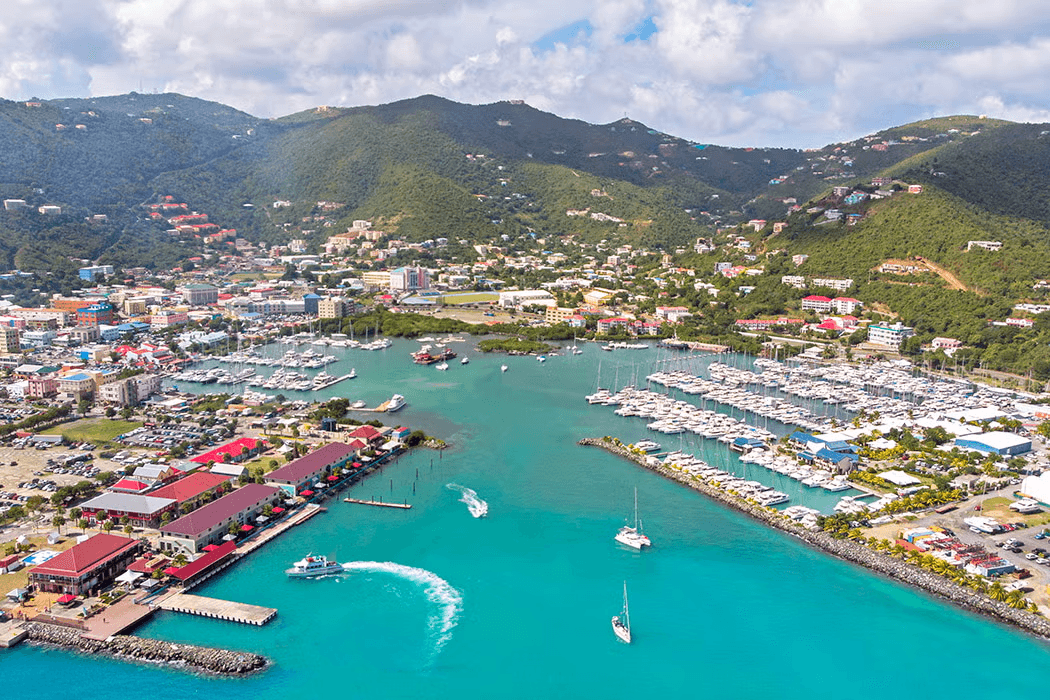
BVI is the second largest offshore jurisdiction for hedge funds, with approximately 25% of all offshore hedge funds domiciled there. Formation costs are lower than Cayman, annual operating costs are materially lower, and the BVI Financial Services Commission offers a tiered fund regime designed for managers at earlier stages of growth. The BVI Incubator Fund is capped at $20M in assets and 20 investors. The BVI Approved Fund is capped at $100M. Both provide offshore tax neutrality and recognized legal structure, with a lighter compliance burden than a fully CIMA-regulated Cayman fund. For a manager raising international capital at sub-$100M scale who is building toward Cayman-scale operations, BVI is a structured and cost-effective option.
Cost Comparison
Delaware LP | Cayman ELP | BVI Approved Fund | |
Formation (legal + state) | $20,000-$40,000 | $25,000-$45,000 | $15,000-$25,000 |
Annual entity fees | $300-$500 | $1,585+ | Below Cayman |
Annual audit | Not required | $15,000-$30,000 | Required |
Annual fund administration | $5,000-$15,000 | $15,000-$50,000 | $10,000-$25,000 |
Estimated Year 1 total | $30,000-$60,000 | $60,000-$130,000 | $35,000-$65,000 |
Decision Framework
Delaware is appropriate when:
The LP base consists primarily of US taxable individuals, the fund is raising under $30M, and the strategy does not involve leverage or derivatives that would create UBTI concerns. A Regulation D 506(b) or 506(c) offering can be structured and launched in three to five weeks, with annual operating costs well below $20,000. The savings over a five-year fund life relative to Cayman can exceed $300,000 on a sub-$30M vehicle.
Cayman is appropriate when:
The LP base includes non-US investors, US tax-exempt capital, or institutional allocators that require it as a condition of investment. The fund uses leverage or derivatives. The target raise is $50M or above, at which point the additional $40,000 to $60,000 in annual overhead represents less than 0.15% of AUM against a standard 2% management fee. Cayman is also appropriate when the manager has a clear path to raising from global family offices, sovereign wealth vehicles, or institutional funds of funds.
BVI is appropriate when:
The manager needs offshore structure and tax neutrality before reaching the scale where Cayman's full compliance infrastructure is economical. BVI works particularly well for a manager raising internationally at sub-$100M scale with a limited initial investor count, as a staging structure before migrating to Cayman at a larger fund size.
Summary
Jurisdiction selection is a function of investor composition and fund economics, not preference. A Delaware LP generating $600,000 annually in management fees on a $30M fund has no structural reason to absorb $80,000 in Cayman operating costs. A $100M fund targeting international and institutional capital has no structural reason to build in Delaware and spend the next two years re-papering at the request of non-US LPs. The cost differential is meaningful at small scale and irrelevant at large scale. Model the investor base first, then choose the structure that matches it.
SPVs
Read more
SPVs
Read more
SPVs
Read more
Company
Read more
SPVs
Read more
SPVs
Read more
Fund Manager
Read more
Fund Manager
Read more
Analytics
Read more
Analytics
Read more
Fund Manager
Read more
Fund Manager
Read more
Fund Manager
Read more
Company
Read more
SPVs
Read more
SPVs
Read more
SPVs
Read more
SPVs
Read more
SPVs
Read more
SPVs
Read more
SPVs
Read more
SPVs
Read more
SPVs
Read more
SPVs
Read more
SPVs
Read more
SPVs
Read more
SPVs
Read more
SPVs
Read more
SPVs
Read more
SPVs
Read more
SPVs
Read more
SPVs
Read more
SPVs
Read more
SPVs
Read more
SPVs
Read more
SPVs
Read more
SPVs
Read more
SPVs
Read more
SPVs
Read more
SPVs
Read more
SPVs
Read more
SPVs
Read more
SPVs
Read more
SPVs
Read more
SPVs
Read more
SPVs
Read more
SPVs
Read more
SPVs
Read more
SPVs
Read more
SPVs
Read more
SPVs
Read more
SPVs
Read more
SPVs
Read more
SPVs
Read more
SPVs
Read more
SPVs
Read more
SPVs
Read more
SPVs
Read more
SPVs
Read more
SPVs
Read more
SPVs
Read more
SPVs
Read more
SPVs
Read more
SPVs
Read more
SPVs
Read more
SPVs
Read more
SPVs
Read more
SPVs
Read more
SPVs
Read more
SPVs
Read more
SPVs
Read more
SPVs
Read more
SPVs
Read more
SPVs
Read more
SPVs
Read more
SPVs
Read more
SPVs
Read more
SPVs
Read more
SPVs
Read more
SPVs
Read more
SPVs
Read more
SPVs
Read more
SPVs
Read more
SPVs
Read more
SPVs
Read more
SPVs
Read more
SPVs
Read more
SPVs
Read more
SPVs
Read more
SPVs
Read more
SPVs
Read more
SPVs
Read more
SPVs
Read more
SPVs
Read more
SPVs
Read more
SPVs
Read more
SPVs
Read more
SPVs
Read more
SPVs
Read more
SPVs
Read more
SPVs
Read more
SPVs
Read more
SPVs
Read more
SPVs
Read more
SPVs
Read more
SPVs
Read more
SPVs
Read more
SPVs
Read more
SPVs
Read more
SPVs
Read more
SPVs
Read more
SPVs
Read more
SPVs
Read more
SPVs
Read more
SPVs
Read more
SPVs
Read more
SPVs
Read more
SPVs
Read more
SPVs
Read more
SPVs
Read more
SPVs
Read more
SPVs
Read more
SPVs
Read more
SPVs
Read more
SPVs
Read more
SPVs
Read more
SPVs
Read more
SPVs
Read more
SPVs
Read more
SPVs
Read more
SPVs
Read more
SPVs
Read more
SPVs
Read more
SPVs
Read more
SPVs
Read more
SPVs
Read more
SPVs
Read more
SPVs
Read more
SPVs
Read more
SPVs
Read more
SPVs
Read more
SPVs
Read more
SPVs
Read more
SPVs
Read more
SPVs
Read more
SPVs
Read more
SPVs
Read more
SPVs
Read more
SPVs
Read more
SPVs
Read more
SPVs
Read more
SPVs
Read more
SPVs
Read more
SPVs
Read more
SPVs
Read more
SPVs
Read more
SPVs
Read more
SPVs
Read more
SPVs
Read more
SPVs
Read more
SPVs
Read more
SPVs
Read more
SPVs
Read more
SPVs
Read more
SPVs
Read more
SPVs
Read more
SPVs
Read more
SPVs
Read more
SPVs
Read more
SPVs
Read more
SPVs
Read more
SPVs
Read more
SPVs
Read more
SPVs
Read more
SPVs
Read more
SPVs
Read more
SPVs
Read more
SPVs
Read more
SPVs
Read more
SPVs
Read more
Fund Manager
Read more
Fund Manager
Read more
Investor Spotlight
Read more
SPVs
Read more
Market Trends
Read more
Company
Read more
Analytics
Read more
Market Trends
Read more
Market Trends
Read more
Products
Read more
Fund Manager
Read more
Fund Manager
Read more
Fund Manager
Read more
Analytics
Read more
Market Trends
Read more
Fund Manager
Read more
Analytics
Read more
Analytics
Read more
Investor Spotlight
Read more
Analytics
Read more
